Film Two · Coming December 2026
Path of the Mesa: Stones of Memory.
A documentary film exploring the sacred relationship between weaving, initiation, and the creation of the Mesa within the Q'ero tradition of Peru.
Kuyas · Weaving · Andean Tradition
How knowledge, identity, and spiritual transmission are carried through the hands, the land, and the continuity of daily life.
Through the use of kuyas - living medicine stones - and the intricate weaving practices of the Andes, the film reveals how knowledge, identity, and spiritual transmission are carried through the hands, the land, and the continuity of daily life.
Weaving as a Way of Life
Not a separate activity. A way of life.
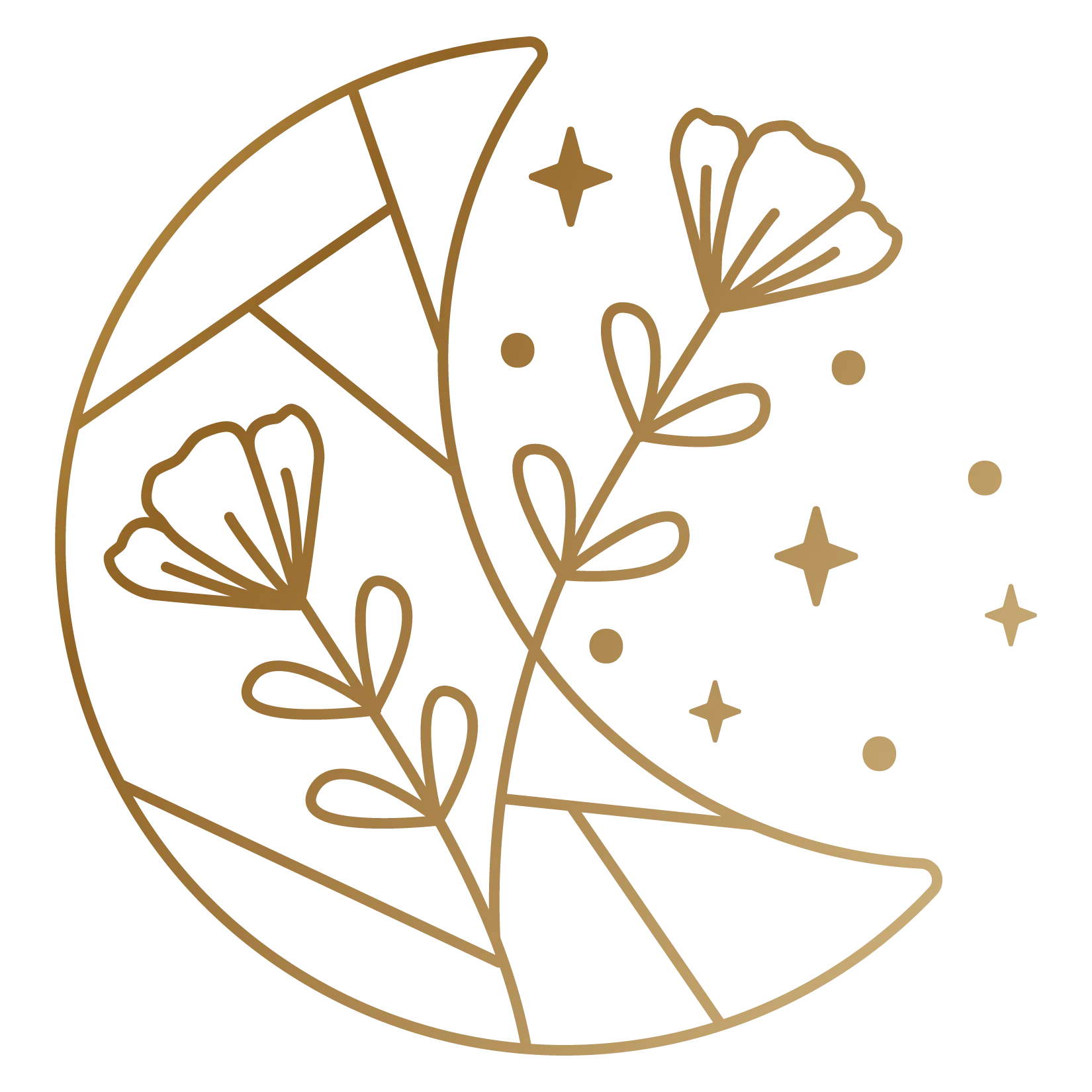
In the Q'ero tradition, weaving is not a separate activity or an art form reserved for special occasions.
It is a way of life.
Families raise alpaca and llama in the high Andes, caring for them across changing seasons and harsh conditions. The wool is sheared by hand, cleaned, and prepared with patience and attention. Natural dyes are created from plants, minerals, and insects gathered from the surrounding environment, drawing color directly from the land itself.
The wool is then spun into yarn by hand, often while walking, tending animals, or sitting in quiet conversation. Only after this long and intentional process does the weaving begin.
There are no machines. No shortcuts.
Each piece is created entirely by hand, with some textiles taking weeks or even months to complete.
What is created is not simply fabric. It is the result of time, care, and relationship.
Pallay - The Language Within the Weaving
A form of communication - not a pattern.
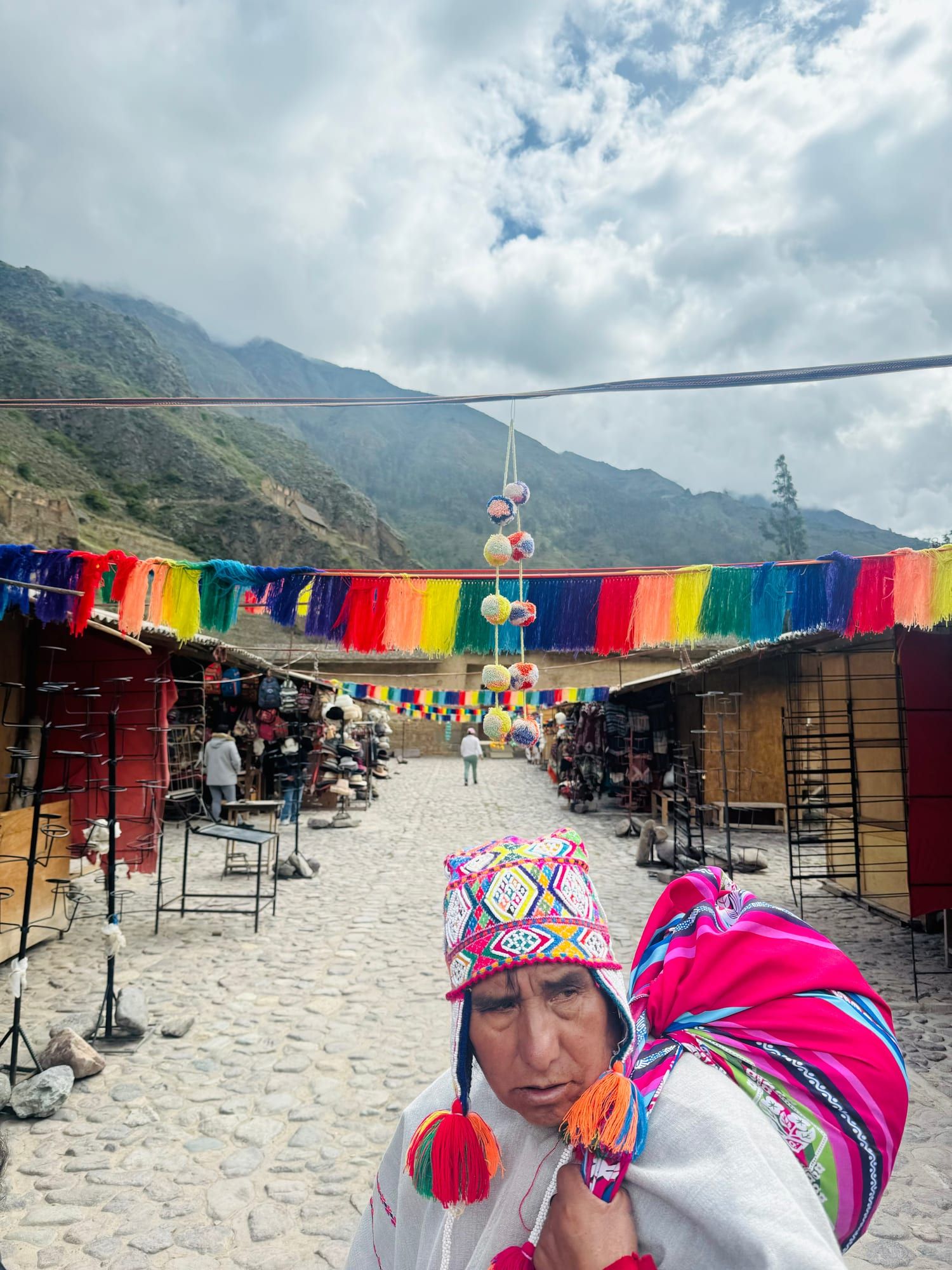
Within each woven piece exists a deeper layer of meaning known as Pallay - the sacred design language of the Andes. Pallay is not a pattern in the conventional sense. It is a form of communication. A way of encoding:
- Story
- Identity
- Lineage
- Cosmology
These designs are not copied from a template or taught through instruction manuals. Instead, they are received, remembered, and expressed over time.
When initiates receive the Ñusta rites, they are given energetic transmissions that begin to live within them. These transmissions are not explained in words, but gradually find their way into form - into the weaving, into the Mesa, into the way a person carries themselves in the world.
The Pallay becomes a reflection of what has been integrated.
Each textile tells a story that cannot be read in a linear way, but can be felt through presence and relationship.
The Mesa and the Stones of Memory
Stones that hold intention, energy, and memory.
Alongside the weaving is the creation of the Mesa, a sacred bundle of kuyas - stones that hold intention, energy, and memory.
These stones are not collected casually.
They are received, worked with, and often passed down, carrying the imprint of prayer and ceremony over time.
Shamans work with the kuyas by holding them, breathing intention into them, and using them as tools for healing and connection. Each stone represents something significant, becoming part of a larger framework that supports both personal and collective work.
Like the weaving, the Mesa is not built from a fixed system. It is created through:
- Experience
- Relationship
- Time
- Repetition
Together, the weaving and the Mesa reflect the same understanding: knowledge is not something you are given all at once. It is something you come into relationship with - slowly, and over time.
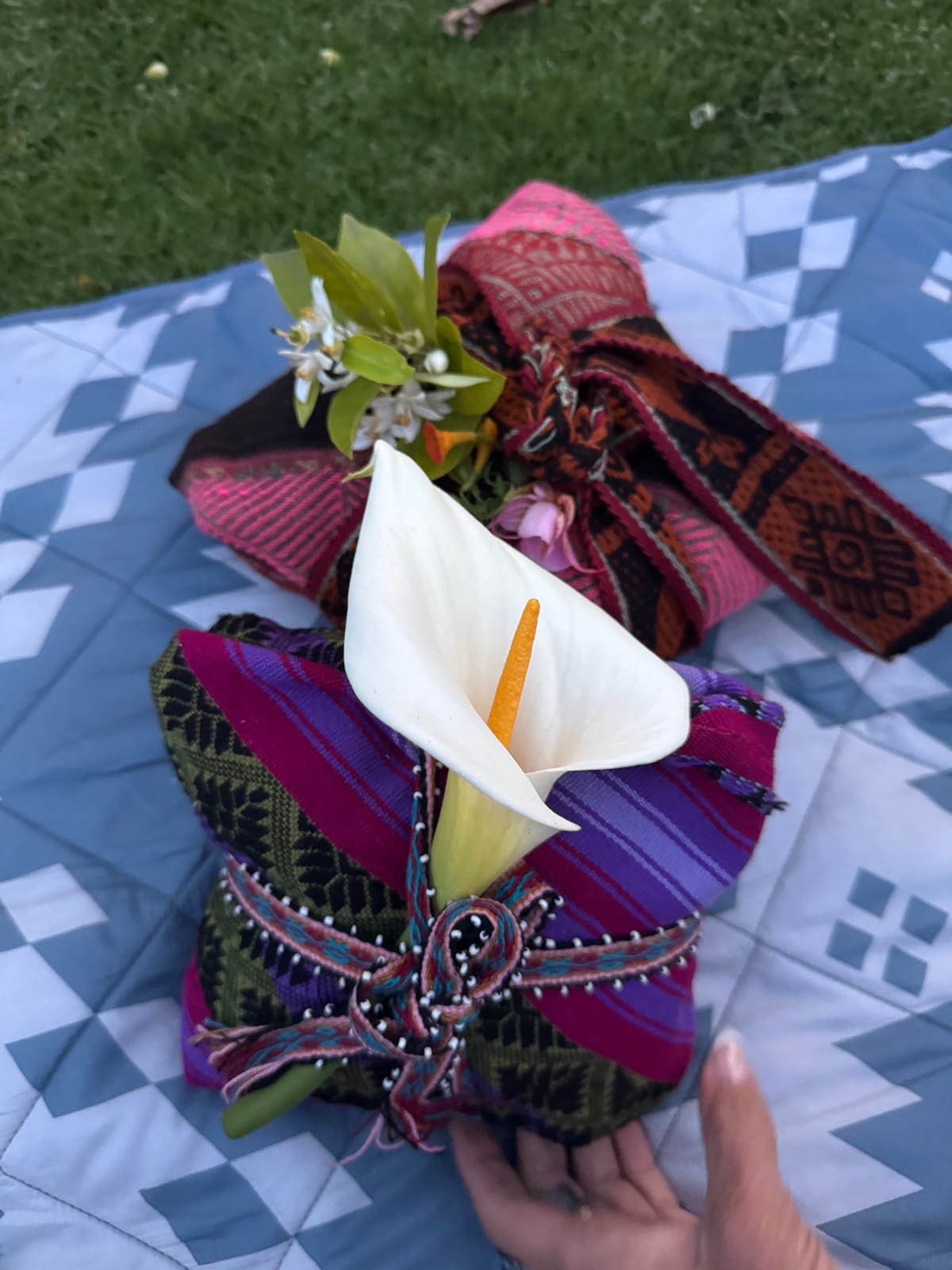
No Single Pattern
There is no single pattern to follow. No prescribed way to create something meaningful.
There is a trust that what has been received - through ceremony, through the Ñusta rites, through relationship with the land - will find its way into expression. This requires patience. It requires presence. And it requires a willingness to allow something to emerge naturally, rather than forcing it into form.
A Living Continuity
Path of the Mesa is not only about stones or weaving. It is about how traditions are carried.
Through hands. Through repetition. Through quiet, daily practice.
It is about how meaning is built - not quickly, but with care, attention, and devotion to something larger than oneself.
A Final Reflection
Some traditions are preserved through writing.
Others are preserved through practice.
Through the placement of a stone. Through the crossing of threads. Through the quiet continuation of something that has been carried forward, generation after generation.
These films are an invitation to witness that continuity - and to consider what it means to live in relationship with it.
Begin Here
Coming December 2026
Join the waitlist for early release announcements, private screenings, behind-the-scenes content, and live discussions.