
Shamanic Healing
What Are Khuyas? The Sacred Stones and Crystals Used in Shamanic Traditions and Ceremonies
In the heart of the Andes, among the Q’ero shamans of Peru, there is a quiet and ancient knowing: stones are alive. They are more than objects.They are wisdom keepers. Energy carriers. Sacred allies. In shamanic practice – especially
In the heart of the Andes, among the Q’ero shamans of Peru, there is a quiet and ancient knowing: stones are alive.
They are more than objects.
They are wisdom keepers. Energy carriers. Sacred allies.
In shamanic practice – especially within the Q’ero lineage – these stones are known as khuyas (pronounced KOO-yahs). And they are among the most beloved and powerful tools in a mesa carrier’s bundle.
Whether you’re walking a new spiritual path or deepening your relationship with Andean energy medicine, understanding khuyas can help you connect more deeply with the healing force of the natural world.
What Is a Khuya?
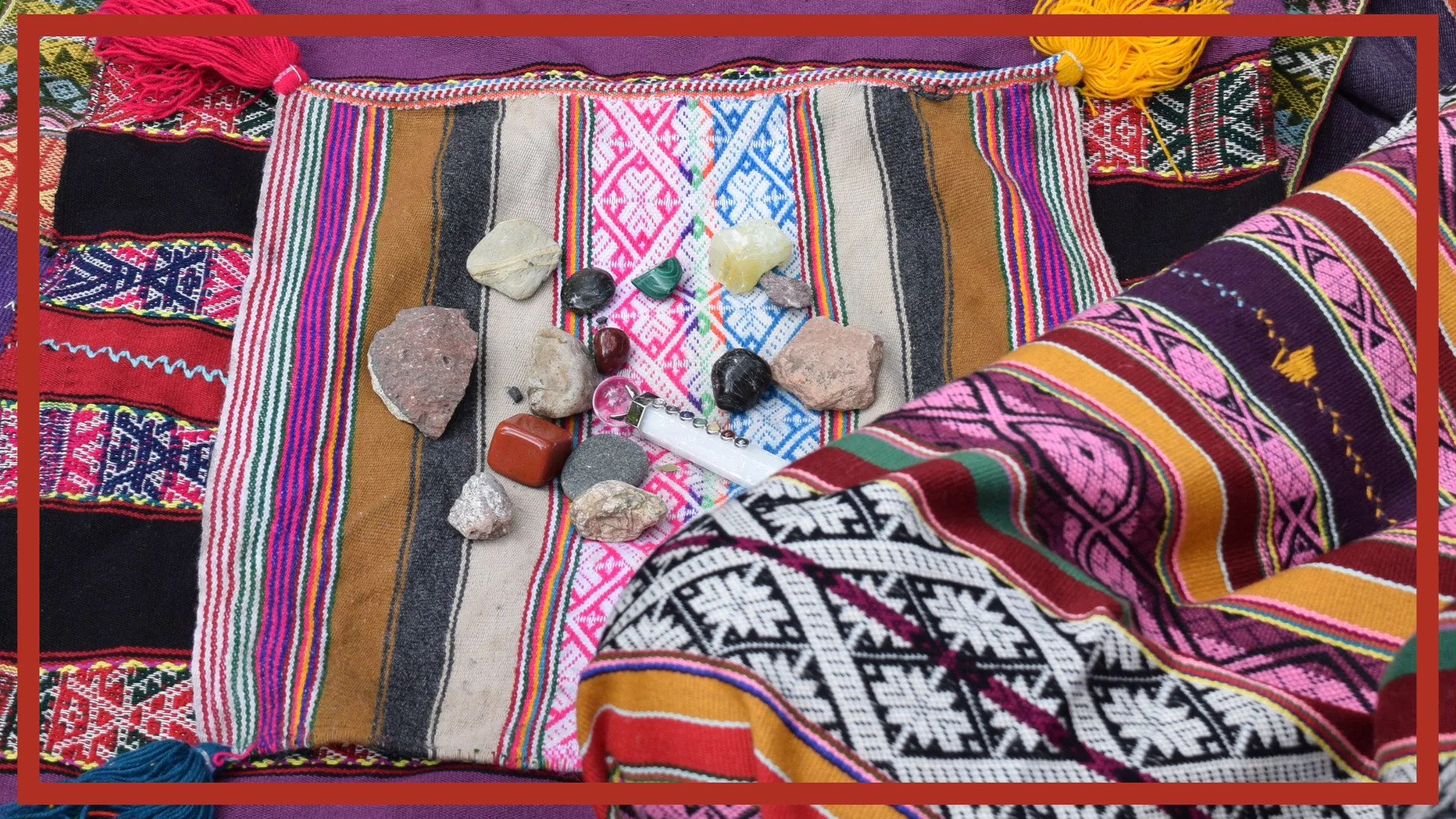
A khuyas is a sacred stone or crystal that has been imbued with intention, memory, and spiritual energy. The word “khuya” means “that which is beloved” in Quechua, the language of the Q’ero.
Each khuya is:
- A personal totem that holds emotional and spiritual energy
- A healing stone used in ceremony or energy work
- A transmitter of prayers, protection, and power
- A teacher that reveals insights through your relationship with it
When placed inside a mesa (sacred altar bundle), khuyas form a kind of living library, each one representing a part of your journey, your pain, your power, or your soul contracts.
“A khuya is not something you use. It’s something you grow in relationship with.”
— Q’ero Wisdom Keeper
How Are Khuyas Chosen?
Khuyas are not always bought.
They are found, gifted, called, or received through dreams, pilgrimage, or ceremony.
Some are simple river stones or pieces of mountain rock.
Others may be crystals that hold a specific vibration.
What matters most is not the stone’s appearance, but the energy it carries for you.
As you build your mesa, your khuyas may represent:
- Past initiations
- Inner wounds you are healing
- Allies you’ve met along your path
- Energies you are learning to integrate (like clarity, protection, or truth)
Over time, each khuya becomes a power object that stores your growth, blessings, grief, and transformation.
Types of Stones & Crystals Commonly Used as Khuyas
While any stone can become a khuya through sacred relationship, some carry natural properties that are frequently honored in shamanic work:
Andean Stones
- Apacheta Stones: Gathered from sacred mountain passes, often used to represent the Apus (mountain spirits)
- Black Andesite or Basalt: Grounding, ancestral connection, protection
Crystals
- Clear Quartz: Amplification, clarity, channeling Spirit
- Smoky Quartz: Grounding and transmutation of heavy energy (hucha)
- Obsidian: Shadow integration, energetic boundaries, cutting cords
- Amethyst: Intuition, dreamwork, spiritual attunement
- Rose Quartz: Heart healing, self-love, emotional release
- Citrine: Vitality, confidence, manifestation
Natural Stones
- River stones (used for flow, letting go, softness)
- Lava stones (used for fire energy and transformation)
- Fossils or petrified wood (used for grounding, deep time wisdom, and ancestral connection)
Again, what makes the stone a khuya is not the mineral – it’s your bond with it.
How Are Khuyas Used in Ceremony?
Khuyas are activated and used during rituals, healing sessions, and personal practices such as:
- Clearing and Extraction Work. The shaman may use a khuya to pull hucha (heavy energy) from the client’s body or energy field.
- Energy Transference. After an intention or prayer is spoken, the khuya absorbs and holds that frequency, like a vessel. It can then be placed on the body, mesa, or altar.
- Elemental Balancing. Each khuya may represent one of the five elements—Earth, Water, Fire, Air, Ether—and be used to restore harmony to a person’s field.
- Divination or Visioning. Some shamans consult their khuyas like a council—receiving intuitive insight through placement, touch, or meditation.
- Personal Practice. You can meditate with a khuya, speak your prayers into it, carry it during ceremonies, or place it on your altar as a reminder of the strength you’ve earned.
Creating Your Own Khuya Collection
If you feel called to begin working with khuyas:
- Start by collecting 1–3 stones that call to you. These may arrive during hikes, rituals, travel, or dreams.
- Cleanse them in nature (sunlight, moonlight, sacred smoke, or stream water).
- Hold them in ceremony. Breathe into them. Speak your intention or story into the stone.
- Place them in your mesa or on your personal altar. Let them rest. Return to them often.
Remember: your relationship with your khuyas is alive. Over time, they will speak to you in ways words cannot.
The Stone Remembers
Long before humans wrote history, the Earth held it.
And stones were the first record-keepers.
When you hold a khuya, you’re not just holding rock.
You’re holding memory. Power. Lineage. Potential.
The stone remembers your grief.
It remembers your prayer.
It remembers who you are becoming.
And when you work with it… you begin to remember, too.
- Schedule a session with Shaman John Whitehorse
- Join our next Sacred Journey
- Download the free guide: Why You’re Not Healing After Years of Therapy
Continue Reading
Related articles
Take the Next Step
Book a discovery call.
Schedule a complimentary 30-minute discovery call to explore whether this work is right for you.